Chapter 3: By Inch of Candle; Auctions in England and the Rise of Art and Asset Sales
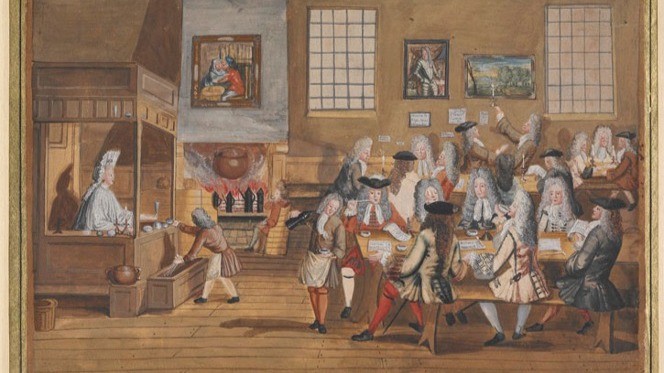
Jumping ahead to the 17th and 18th centuries, England reimagined the auction with a quirky yet clever innovation: the inch of candle. At Lloyd’s Coffee House in London—a gathering place for merchants and shipowners—goods were sold via open cry bidding while a candle burned. When the flame extinguished, the highest bid stood. This system discouraged last-second bids and emphasized fast decision-making.

Lloyd’s Coffee House wasn’t just a social venue—it was the beating heart of early commerce and risk management. Over time, it evolved into Lloyds of london, the most renowned insurance marketplace in the world. It was here that modern contract law, financial underwriting, and competitive pricing through open bidding took shape.
At the same time, the sale of art, books, and collectibles became institutionalized through auctions. In 1744, Samuel Baker founded Sotherby’s with an auction of rare books. A few decades later, James Christie established Christie’s in 1766, initially auctioning fine art and estates. These institutions legitimized auctions as a refined, high-stakes marketplace—no longer limited to cattle or confiscated goods, but now fine paintings, rare manuscripts, and later, multimillion-dollar assets.
At Crexi Auctions, we don’t use candles, we use online bidding. Any bids placed in the last 2 minutes adds 3 minutes to the clock. Let’s chat.

This chapter is part of A Brief History of Commercial Property Auctions. See every chapter, plus the playbook for using auctions today, in the complete guide.